
 Hamur İşleri
 İçecekler
 Kahvaltılık
 Tatlılar
 Ara Yemek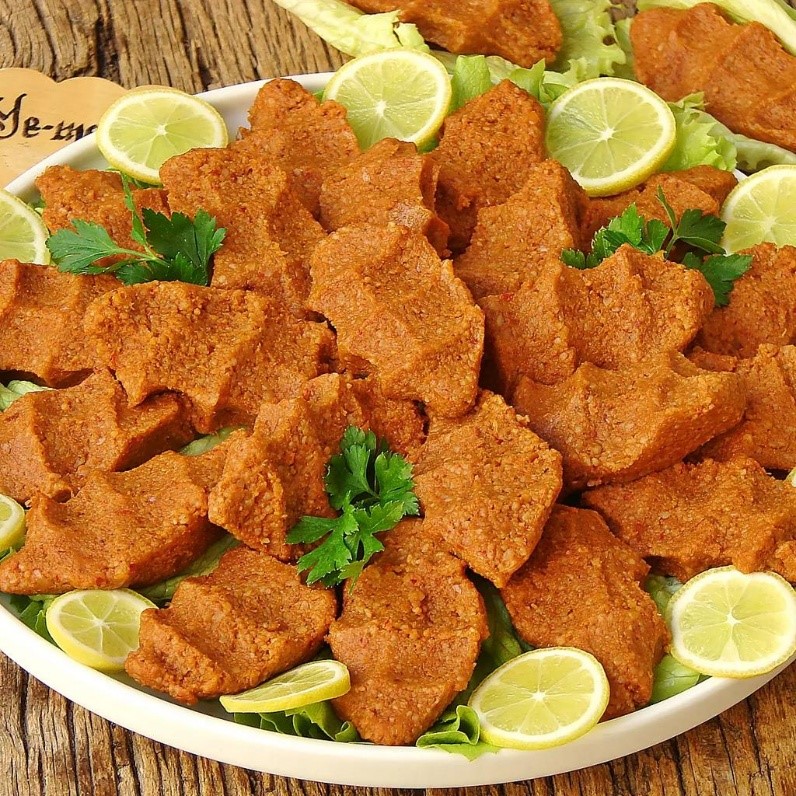
GÜNEYDOĞU ANADOLU BÖLGESİ
Çiğ köfte; ince bulgur, isot ve baharatların uzun süre yoğrulmasıyla yapılan, Güneydoğu Anadolu mutfağının en bilinen lezzetlerinden biridir. Geleneksel halinde çiğ et kullanılırken günümüzde çoğunlukla etsiz yapılır.
Çiğ köftenin en bilinen hikâyesi, Şanlıurfa çevresinde anlatılır.
Rivayete göre Hz. İbrahim döneminde Nemrut, ateş için şehirdeki tüm odunları toplatır ve halkın ateş yakmasını yasaklar. Avladığı ceylan etini pişiremeyen bir avcı, eti ince ince dövüp bulgur ve baharatlarla yoğurarak çiğ şekilde tüketir. Böylece çiğ köftenin ortaya çıktığına inanılır.
Tarihsel olarak ise çiğ köfte; Mezopotamya mutfak kültürünün çok eski bir parçasıdır. Özellikle Adıyaman, Gaziantep ve Diyarbakır çevresinde farklı usulleri bulunur.
Eskiden büyük tepsilerde, ailece ya da misafir için hazırlanır; yoğurma işi güç istediğinden ustalık göstergesi sayılırdı. Bu yüzden Güneydoğu’da “iyi çiğ köfte yoğurmak” önemli bir maharet kabul edilir.
Alerjenler: Gluten.Acı biber, isot, sarımsak ve baharat hassasiyeti yaratabilir.
SOUTHEASTERN ANATOLIA REGION
Çiğ köfte is one of the best-known dishes of Southeastern Anatolian cuisine, prepared by kneading fine bulgur, isot pepper, and spices for a long time. While the traditional version contains raw meat, today it is mostly prepared without meat.
The most famous story about çiğ köfte is told around Şanlıurfa.
According to the legend, during the time of Prophet Abraham, King Nimrod collected all the firewood in the city and forbade people from lighting fires. Unable to cook the gazelle he had hunted, a hunter finely pounded the meat and kneaded it with bulgur and spices, consuming it raw. This is believed to be the origin of çiğ köfte.
Historically, however, çiğ köfte is considered a very old part of Mesopotamian culinary culture. Different regional styles exist, especially around Adıyaman, Gaziantep, and Diyarbakır.
In the past, it was prepared in large trays for families or guests. Since kneading required strength and skill, it was regarded as a sign of mastery. For this reason, being able to prepare good çiğ köfte is still considered an important skill in Southeastern Anatolia.
Allergens: Gluten.May cause sensitivity to hot pepper, isot pepper, garlic, and spices.
Önce kuru soğan ve sarımsak çok ince doğranır ya da ezilir. Geniş bir leğende isot, salça ve baharatlarla birlikte ovulur. Böylece isotun rengi ve aroması ortaya çıkar.
İnce bulgur eklenir. Azar azar su verilerek uzun süre yoğrulur. Çiğ köftenin en önemli kısmı budur; bulgurun yumuşaması ve macun kıvamına gelmesi gerekir.
Ardından nar ekşisi ve yağ eklenir. Yoğurma devam eder. Geleneksel usulde çiğ et en son aşamada eklenip iyice yedirilir.
Karışım ele yapışmayan, parlak ve sıkılabilir bir kıvama gelince hazır olur.
Avuç içinde sıkılarak şekil verilir ve marul, maydanoz, limon, taze soğan eşliğinde servis edilir.
First, onions and garlic are finely chopped or crushed. In a large bowl, isot pepper, tomato paste, and spices are rubbed together to release the color and aroma of the isot.
Fine bulgur is then added. Water is gradually incorporated while the mixture is kneaded for a long time. This is the most important stage of çiğ köfte preparation, as the bulgur must soften and reach a paste-like consistency.
Afterward, pomegranate molasses and oil are added, and the kneading continues. In the traditional method, raw meat is incorporated at the final stage.
When the mixture becomes glossy, non-sticky, and easy to shape by hand, it is ready.
It is shaped by squeezing in the palm of the hand and served with lettuce, parsley, lemon, and green onions.